
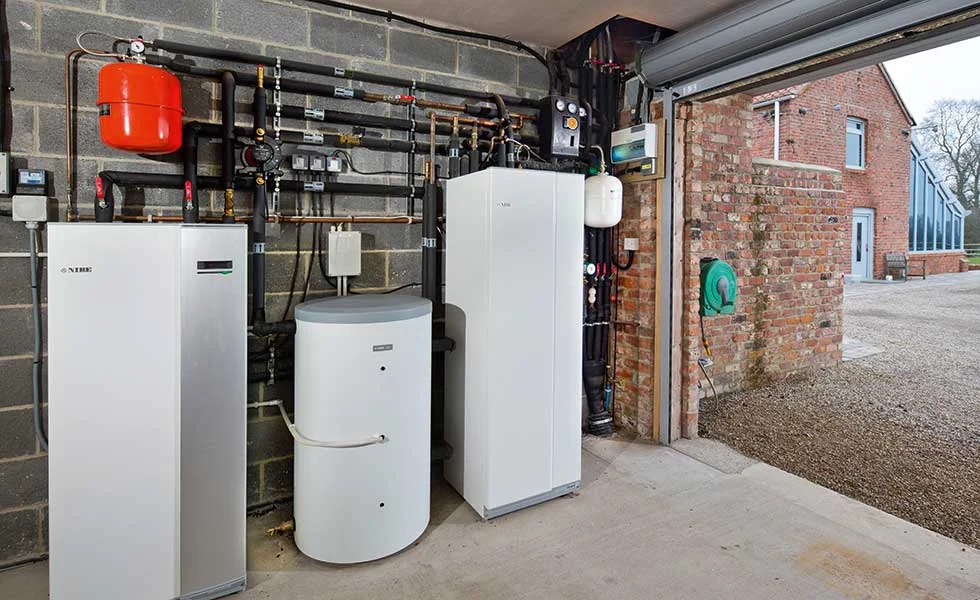
Heat pumps have a reputation for being fit-and-forget, and compared with an oil boiler they very nearly are. But “nearly” is doing some work in that sentence. An annual service is what keeps the warranty valid, keeps the running costs where they were on the day it was commissioned, and catches the small faults that otherwise turn into a cold house in January. Here is what the service involves, what it typically costs, and how to tell when you should not wait for it.
The short answer: once a year
Every major manufacturer, including Mitsubishi, Stiebel Eltron, Nibe, Vaillant and Daikin, specifies an annual service for their air source heat pumps, and most make it a condition of the warranty. The MCS installation standards your installer worked to assume the same. There is no benefit in servicing more often than that unless something has gone wrong, and no sensible case for stretching it to two years.
Timing matters more than most people realise. The ideal window is late summer or early autumn. The system is about to work its hardest, the engineer can set the heating curve for the season ahead rather than guessing in May, and you are not competing for a slot with everyone whose heating has just failed in the first cold snap.

What a proper heat pump service includes
A service is not a quick look at the outdoor unit and a signature. Done properly it takes an engineer around an hour and a half on a typical air source system, and covers both halves of the installation: the heat pump itself and the hot water and heating circuit it feeds.
| Area | What the engineer checks |
|---|---|
| Outdoor unit | Coil and fan cleared of leaves and debris, fan bearings, condensate drainage, mountings and vibration, pipework insulation |
| Refrigerant circuit | Visual inspection for leaks and corrosion, plus a formal F-gas leak check where the refrigerant charge requires it |
| Heating circuit | Filters and strainers cleaned, system pressure, expansion vessel charge, antifreeze concentration where used, pump operation |
| Electrics and controls | Connections tightened, sensors verified, error log reviewed, software updated where the manufacturer has released one |
| Settings | Heating curve, flow temperatures, schedules and legionella cycle set up for the coming season |
| Hot water cylinder | Immersion and thermostat tested, and the annual safety check your unvented cylinder legally requires |
| Report | A written summary of what was found, what was adjusted and anything to keep an eye on |
Two items on that list are easy to miss when comparing quotes. The unvented cylinder check is a separate legal requirement and some providers leave it out. And the settings review is where most of the running cost difference comes from: a system that has drifted to a higher flow temperature than it needs will heat the house perfectly well and cost you more on every bill doing it.
What does a heat pump service cost?
Across the UK an annual service on a domestic air source heat pump typically costs between £150 and £300. Ground source systems and larger cascade installations sit above that, and the cylinder safety check and any F-gas work may be itemised separately, so it is worth asking exactly what is included before comparing prices. We quote a fixed price for each system in advance; details are on our heat pump servicing and repairs page.
For context, we showed in our piece on winter running costs that the difference between a heat pump running at a seasonal efficiency of 3.0 and one running at 4.0 is over £200 a year on a typical home. Settings and cleanliness are a good part of that gap, which is why a service usually pays for itself.
Signs you should not wait for the annual service
- The outdoor unit stays iced up. A short defrost cycle, with steam and a few minutes of quiet, is normal in cold damp weather. A unit that stays frozen is not.
- Error codes you cannot clear. Note the code and ring your engineer rather than repeatedly resetting the controller.
- Bills creeping up for no reason. Same weather, same thermostat setting, more electricity. Something has drifted.
- Lukewarm radiators or slow hot water recovery. Often a flow, pump or diverter valve issue rather than the heat pump itself.
- New noises. A change in fan or compressor sound usually means bearings, debris or a loose mounting. Our guide to air source heat pump noise covers what is normal.
- Pressure that keeps dropping. A slow leak or a tired expansion vessel, and worth catching before it trips the system on a cold night.
What you can do between services
Not much, and that is the point. Keep plants, leaves and snow clear of the outdoor unit so air can move through it freely. Rinse or replace any filters the manufacturer says are user-serviceable. Leave the system running rather than switching it on and off like a boiler, because heat pumps are at their most efficient holding a steady temperature. And resist adjusting the heating curve yourself; if the house is too cold or too warm, that is a conversation for the service visit.
Do you need the original installer?
No. Warranties require an annual service by a competent engineer, not by the company that fitted the system. If your installer has moved on, stopped trading or is simply too far away, any MCS-accredited heat pump installer can take the service on. We look after systems across Swansea, Carmarthenshire, Neath Port Talbot, Bridgend and Pembrokeshire that we did not originally install; send us the make and model and we will confirm.
Book before the cold weather
If your air source heat pump or ground source heat pump has not been serviced in the last twelve months, now is the time. Get in touch with your address and the make and model, and we will give you a fixed price and a date.