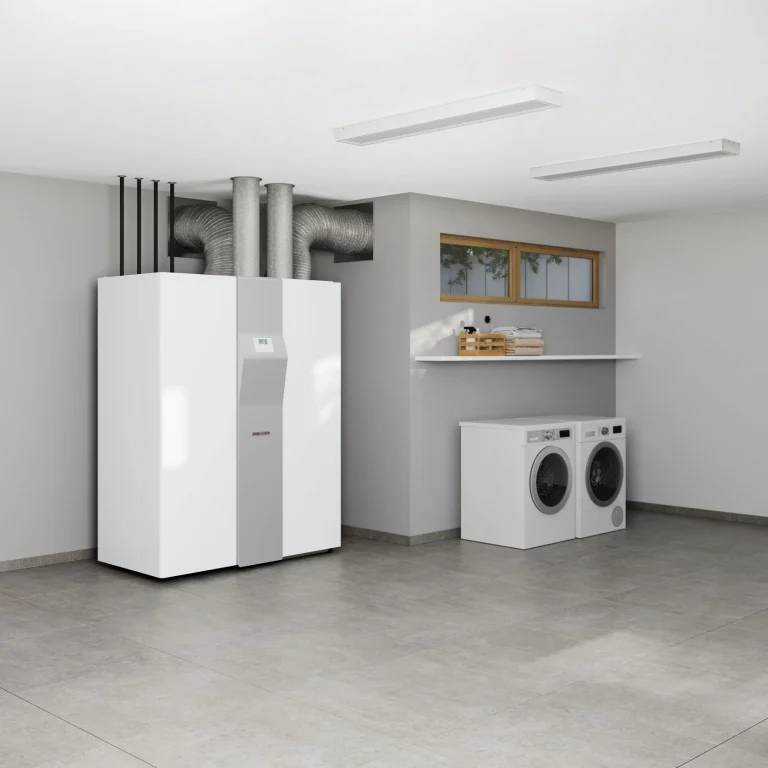
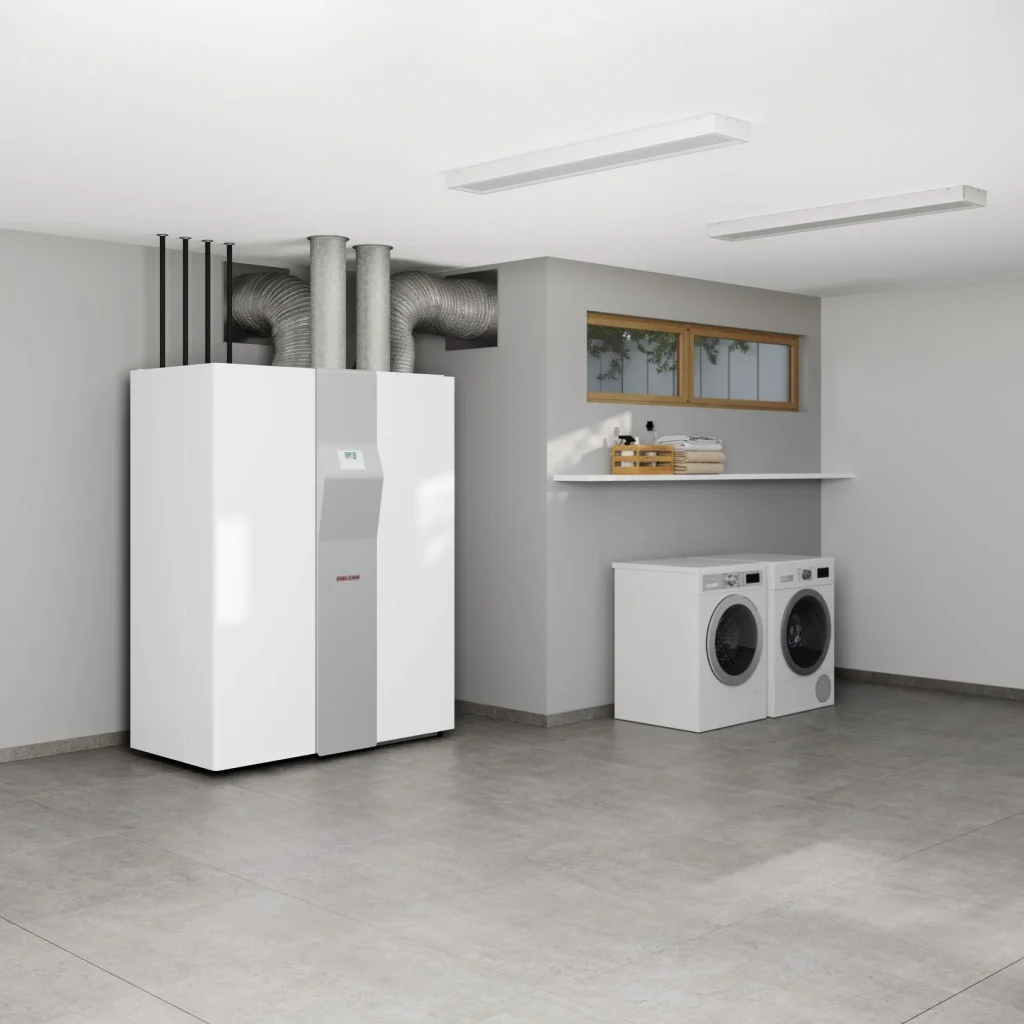
Mechanical Ventilation with Heat Recovery, more commonly known as MVHR, is a whole-home ventilation system designed to deliver fresh, filtered air while retaining heat that would otherwise be lost. It is becoming increasingly common in modern, energy-efficient homes and is often paired with technologies such as heat pumps and solar PV to create a low-carbon, high-comfort living environment.
This guide explains what MVHR is, how it works, and when it makes sense for your property.
What Is MVHR?
MVHR is a balanced ventilation system that continuously extracts stale, moist air from areas like kitchens, bathrooms, and utility rooms, while supplying fresh air to living spaces and bedrooms.
The key difference from traditional ventilation is heat recovery. Instead of simply expelling warm air outside, an MVHR unit transfers most of that heat to the incoming fresh air using a heat exchanger. The two air streams never mix, but heat is retained.
The result is a constant supply of fresh air without the heat loss associated with extractor fans, trickle vents, or opening windows.
How MVHR Works
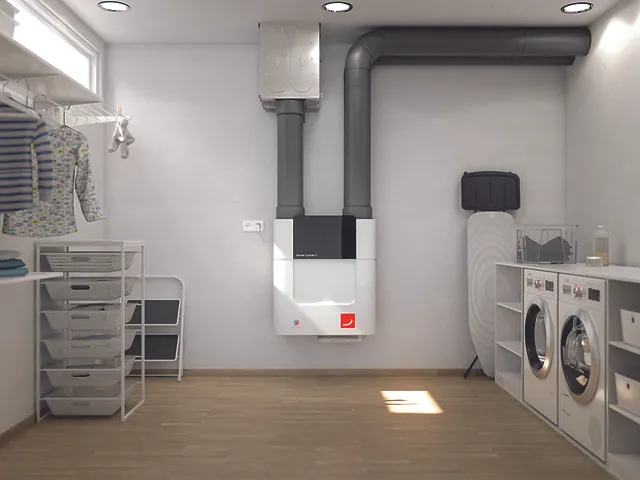
An MVHR system consists of:
- A central heat recovery unit
- Ductwork distributing air throughout the home
- Filters to remove dust, pollen, and pollutants
Air is extracted from wet rooms and passed through the heat exchanger. At the same time, fresh air is drawn in from outside and warmed by the outgoing air before being supplied to living spaces.
Most systems recover 85 to 95 percent of the heat from extracted air, significantly reducing ventilation heat losses.
Key Benefits of MVHR
Improved Indoor Air Quality
MVHR provides a constant supply of filtered air, helping to reduce dust, allergens, and outdoor pollutants. This is particularly beneficial for people with asthma or allergies.
Reduced Heat Loss
Because heat is recovered from extracted air, homes stay warmer for longer with less reliance on heating systems.
Condensation and Mould Control
By continuously removing moisture, MVHR helps prevent condensation, damp, and mould growth, which are common issues in well-sealed homes.
Quieter, More Comfortable Homes
With no need to open windows for ventilation, MVHR reduces external noise and eliminates draughts.
Lower Energy Bills
When combined with an efficient heating system, MVHR can contribute to lower overall energy consumption.
MVHR and Heat Pumps – A Natural Pairing
MVHR works particularly well alongside air source or ground source heat pumps. Heat pumps operate most efficiently in homes with low heat demand and stable indoor temperatures.
By reducing ventilation heat losses, MVHR helps heat pumps run more efficiently and consistently. This can improve comfort and reduce running costs.
In all-electric homes, MVHR plays a key role in maintaining warmth without excessive energy use.
Is MVHR Right for Your Home?
MVHR is best suited to:
- New builds
- Self-builds
- Deep retrofits
- Homes that are highly airtight
Airtightness is critical. MVHR relies on controlled ventilation, so it performs poorly in draughty properties. For existing homes, significant improvements such as airtight membranes, upgraded windows, and careful sealing may be required.
For this reason, MVHR is often designed into a project early, rather than added later as an afterthought.
Design and Installation Considerations
Proper design is essential for MVHR to perform well. This includes:
- Correct sizing of the unit
- Thoughtful duct routing to minimise noise and pressure loss
- Easy access for filter changes and maintenance
- Commissioning and balancing after installation
A poorly designed system can be noisy, inefficient, or ineffective. A well-designed system should be almost unnoticeable in day-to-day use.
Running Costs and Maintenance
MVHR systems are inexpensive to run, typically costing only a few pounds per month in electricity.
Maintenance is simple:
- Filters are usually changed every 6 to 12 months
- The unit should be checked periodically to ensure airflow remains balanced
Good maintenance ensures consistent air quality and long system life.
MVHR in Low-Energy and Passivhaus Homes
MVHR is a core component of homes built to the Passivhaus standard, where airtightness and energy efficiency are paramount.
In these homes, MVHR is not optional – it is essential for maintaining air quality while meeting strict energy targets.
MVHR is not just a ventilation upgrade. It is a fundamental part of creating a comfortable, healthy, and energy-efficient home.
When designed correctly and paired with modern heating systems, MVHR improves air quality, reduces heat loss, and supports the move towards low-carbon living.
Get in touch with our team to discuss how we might be able to help you.