
Ground Source Heat Pumps in Swansea, Pembrokeshire & Lower Powys

Ground source heat pumps use a renewable source of energy that will save money on heating costs. They are environmentally friendly and can help you reduce your carbon footprint.

At Renewable Heating Wales, we install ground source heat pumps across the Swansea, Pembroke, Vale of Glamorgan and Lower Powys area.

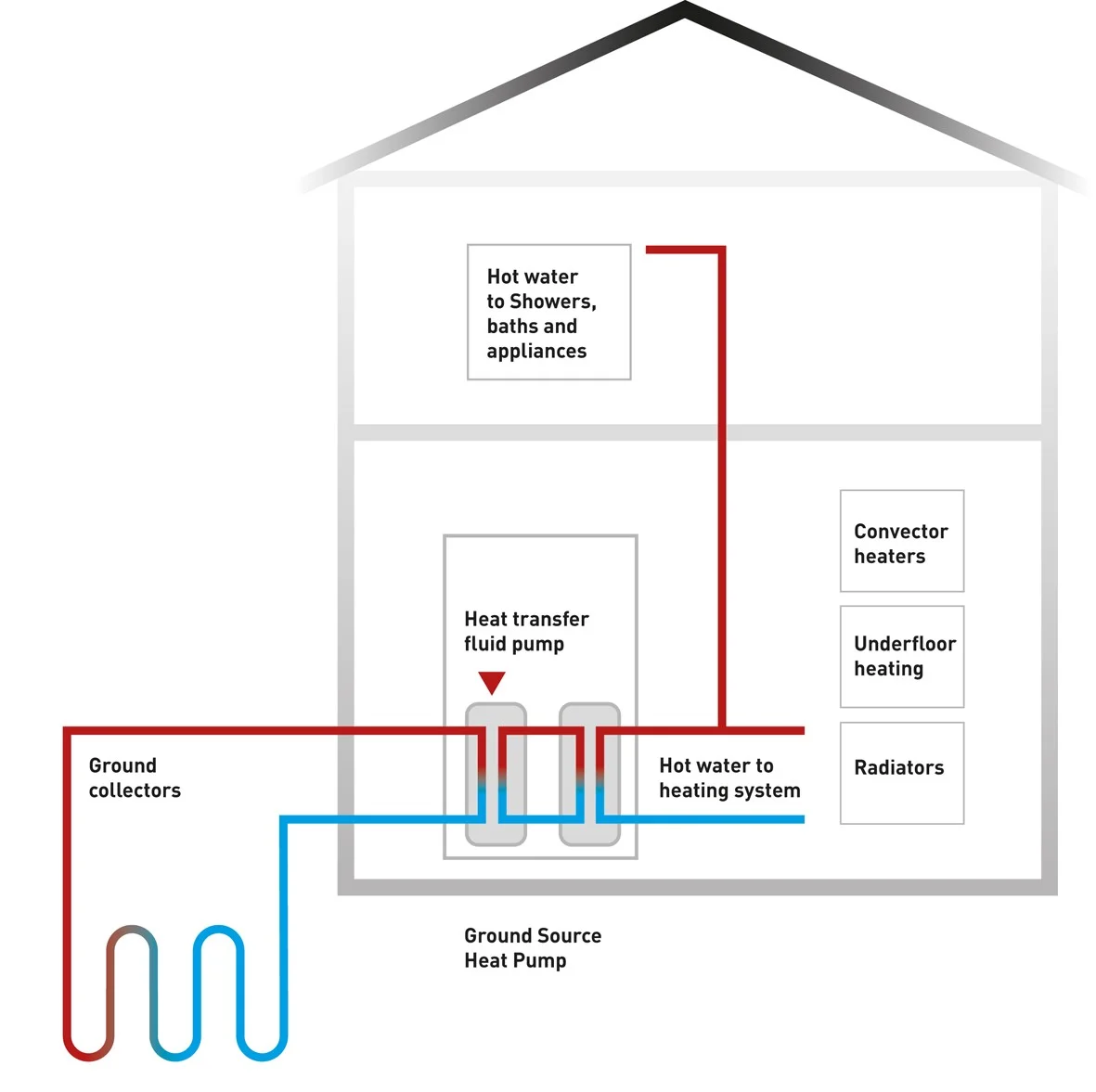
How Do Ground Source Heat Pumps Work?

Ground source heat pumps work by making use of the naturally occurring heat found 1 metre under the earth outside your property. In Wales, the underground temperature stays at around 11 degrees centigrade for most of the year, regardless of the air temperature.

To make use of this stable heat source, pipes are buried a few metres underground and filled with liquid. This liquid absorbs the warmth from the earth and carries it to a heat exchanger, which in turn warms the inside of a building.

Is My Home Suitable For A Ground Source Heat Pump?

If you’re thinking about having a ground source heat system installed in your property, get in contact with us so we can talk to you about the benefits and drawbacks. It’s not suitable for every building, but as a greener energy source, it’s worth considering.

Ground source heat pumps are a good alternative system to install if your property isn’t on a mains gas supply. You must, however, have a piece of land large enough to have the pipes installed into the ground.

The land doesn’t have to be extensive, there are different systems to suit the space. At RHW, we use either a flat collector (a large pipe system that is laid about 1m below ground), a geothermal probe, via deep drilling into the ground (30 to 150 m), or geothermal baskets, which are particularly suitable for smaller spaces.

Your home must also be very well insulated to make the most of a ground source heat pump.

Government Grants For Ground Source Heat Pumps

You can get thousands of pounds towards a new heating system with ground source heat pump grants. The UK government is committed to reaching net zero emissions, and that’s why it is offering incentives to reduce the cost of greener heating.

To understand what is possible in your home or business, give us a call. To guide you through a ground source heat pump installation, our qualified engineers will assess the property and offer our advice. We are here to help you choose the right system and we can supply a detailed quote for installation so you know what to expect.

The running costs depend on various factors, so it’s hard to give an estimate without more information about your project. However, a well-designed, well-installed heat pump is generally cheaper to run than oil or LPG boilers and direct electric systems. While the savings compared to a mains gas boiler may be less, they are increasing.

Yes, properly designed heat pump systems can offer full heating and hot water, qualifying for schemes like the Boiler Upgrade Scheme. Unvented cylinders ensure hot water at 50-65°C, suitable for showers and baths.

Yes, there are various funding options available across the UK:

  • Boiler Upgrade Scheme.
  • Energy Company Obligation Scheme.
  • Warmer Homes Scotland.
  • Home Energy Scotland Scheme.
  • Nest Scheme, Wales.

For more information read our Guide to Funding for Heat Pumps

Yes, heat pumps are compatible with both radiators and underfloor heating systems. When using radiators, it may be necessary to have slightly larger ones to ensure sufficient heat output at the lower flow temperatures required for optimal heat pump efficiency. While heat pumps can work with existing radiators, the decision to replace them with larger ones or switch to underfloor heating depends on the unique requirements of your home and the age and size of your radiators. Our experienced technical consultants will assess your situation and provide guidance on the most suitable installation for your project.

Not necessarily, but if your current pipework has a small diameter (15mm or less, also known as microbore), then additional consideration will be needed on the design side to ensure optimal heat pump performance.

Heat pumps require more space compared to wall-hung boilers. It’s a good idea to plan a dedicated area for the equipment. Utility rooms, garages, basements, and detached outbuildings can serve as suitable plant rooms. A typical ground source system requires an area approximately 2m deep by 2m-2.5m wide. Air source systems require less space, usually about 1m deep by 1.5m wide, plus the outdoor fan unit.

There are two methods for installing heat collector pipes: vertical boreholes or horizontal trenches. Borehole systems require less space, with boreholes drilled up to 200m deep and 6m-10m apart. As a general rule, a horizontal loop array will occupy two to three times the total heated floor area of your house in available land.

In most cases, the installation of a ground source heat pump is considered permitted development and does not require planning permission. A single air source heat pump is also usually considered permitted development, subject to certain criteria being met. However, if you live in a listed building or a conservation area, it’s best to check with your local council for any specific requirements.

A standard heat pump installation typically takes about a week to install and commission. This timeframe does not include ground works for ground source heat pumps or the installation of underfloor heating and/or radiators.

The heat pump installation itself usually takes 3 to 5 days, depending on complexity and location. However, additional works by other trades may be required before or after the installation. These can include electrical upgrades and connections, repairs or replacements of wall surfaces, plumbing works, and more.

Yes, heat pumps can still provide heat to your home even in very cold temperatures. Most heat pumps can deliver heat when outdoor temperatures drop as low as -25°C. They use the same technology as your kitchen fridge/freezer, which extracts heat from cold air.

Heat pumps are sealed systems with a lifespan of up to 20 years. Most manufacturers recommend annual servicing to ensure proper operation and efficiency. Additionally, if you have a new unvented cylinder, it requires annual safety checks. Regular servicing is usually necessary to maintain the manufacturer’s warranty.

The cost of installing an air source heat pump usually ranges between £9,000 and £15,000, depending on factors such as the size, power, hot water storage requirements, and internet controllability. Ground source systems can cost from £15,000 to over £30,000, depending on the heat pump size, hot water cylinder, and the chosen loop or borehole system.

Modern air source heat pumps are designed to operate quietly and should not cause disturbances if installed properly. Planning regulations typically require the noise level at the nearest assessment point (usually your neighbour’s window) to be 42db or less, like the background noise in a library.

It is important to select a qualified and reputable installer for your heat pump. When choosing an installer, look for professionals who are MCS (Microgeneration Certification Scheme) accredited. The MCS certification ensures that the installer has undergone appropriate training and assessment to meet the required standards for installing renewable energy systems, including heat pumps.