MVHR Systems Installers
Mechanical Ventilation with Heat Recovery (MVHR)
Mechanical Ventilation with Heat Recovery (MVHR) systems deliver clean, filtered air while retaining heat that would otherwise be lost. At Renewable Heating Wales, we design and install MVHR systems that improve indoor air quality, reduce heat loss, and support modern, energy-efficient buildings across Wales.
Our MVHR solutions are ideal for new build homes, self-build projects, and highly insulated properties where airtightness and ventilation must work together.
What is MVHR?
MVHR stands for Mechanical Ventilation with Heat Recovery. It is a whole-building ventilation system that continuously extracts stale, moisture-laden air from inside a property and replaces it with fresh, filtered air from outside.
Unlike traditional ventilation methods that rely on opening windows or trickle vents, MVHR provides controlled, consistent airflow while recovering heat from the extracted air. This helps maintain comfortable indoor temperatures while improving air quality and reducing heat loss.
MVHR systems are commonly used in modern homes and buildings designed to meet high standards of insulation and airtightness.
How MVHR Works?
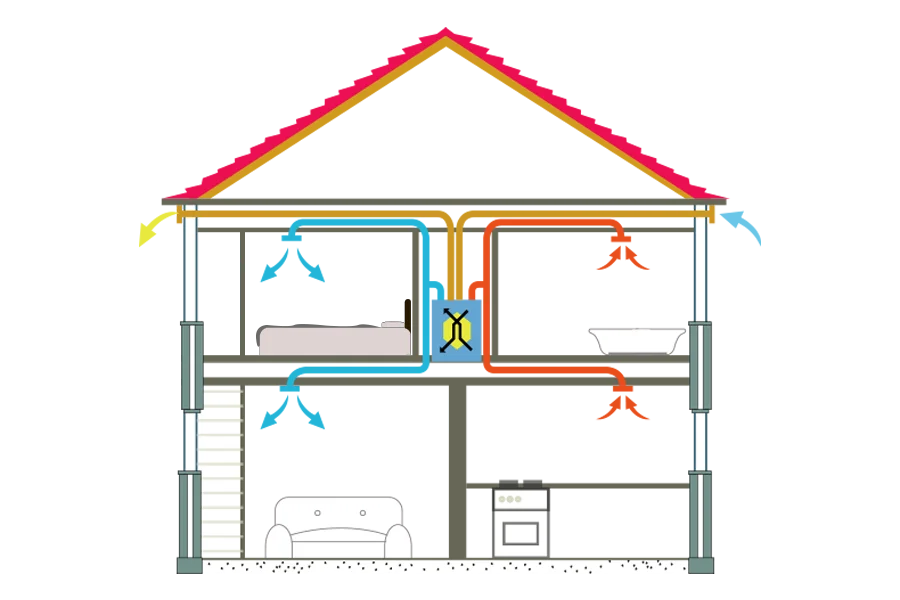
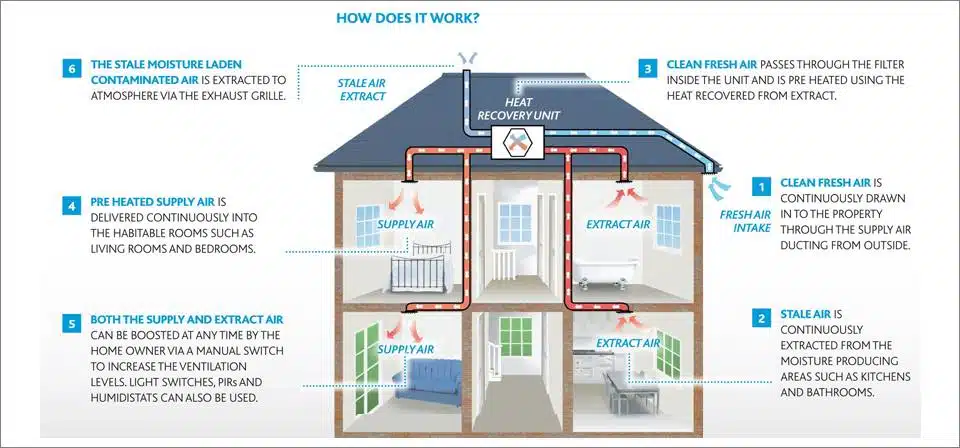
An MVHR system operates using a balanced supply and extract process.
Stale air is removed from wet rooms such as kitchens, bathrooms, and utility spaces. At the same time, fresh air is supplied to living areas and bedrooms. Inside the MVHR unit, a heat exchanger transfers warmth from the outgoing air to the incoming fresh air without mixing the two air streams.
This process allows the building to remain well ventilated while retaining most of the heat that would otherwise be lost. MVHR systems installed in Wales typically comply with Building Regulations Part F, System 4.
The Benefits of MVHR Systems
MVHR Installation Across South Wales
Renewable Heating Wales provides MVHR system design and installation across South Wales. We work with homeowners, self-builders, and developers throughout the region, delivering compliant, energy-efficient ventilation systems tailored to each property.
Our coverage includes Swansea, Carmarthenshire, Cardiff, Bridgend, the Vale of Glamorgan, and South Powys. Every MVHR system is designed to suit local building types, airtightness targets, and environmental conditions, ensuring long-term performance and indoor air quality.
Mechanical Ventilation with Heat Recovery
The MVHR system, or Mechanical Ventilation with Heat Recovery, is a building ventilation system that operates based on a balanced supply and extract principle.
Its functionality centres around a heat exchanger unit responsible for recovering heat.
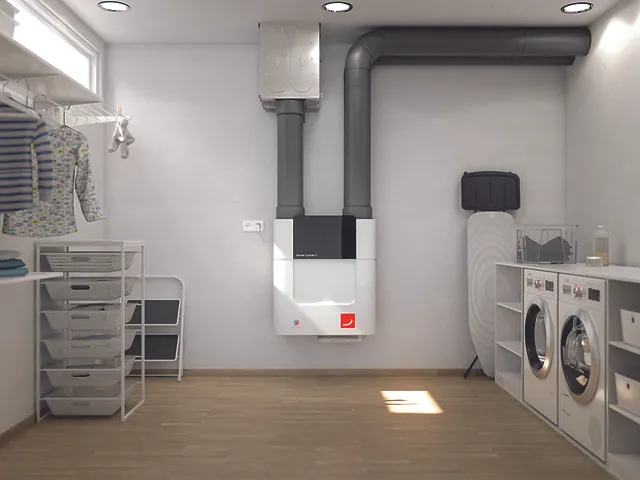
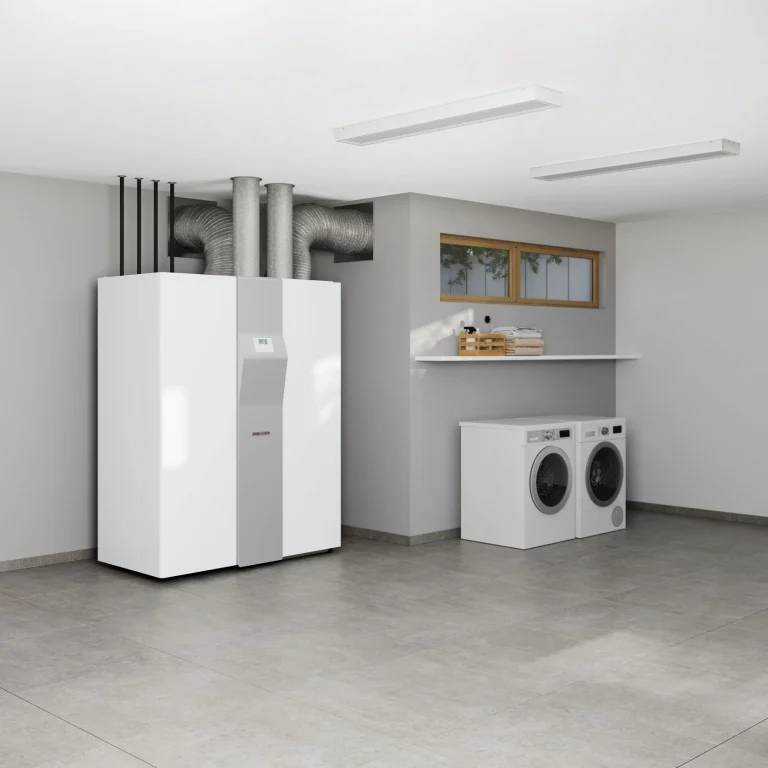
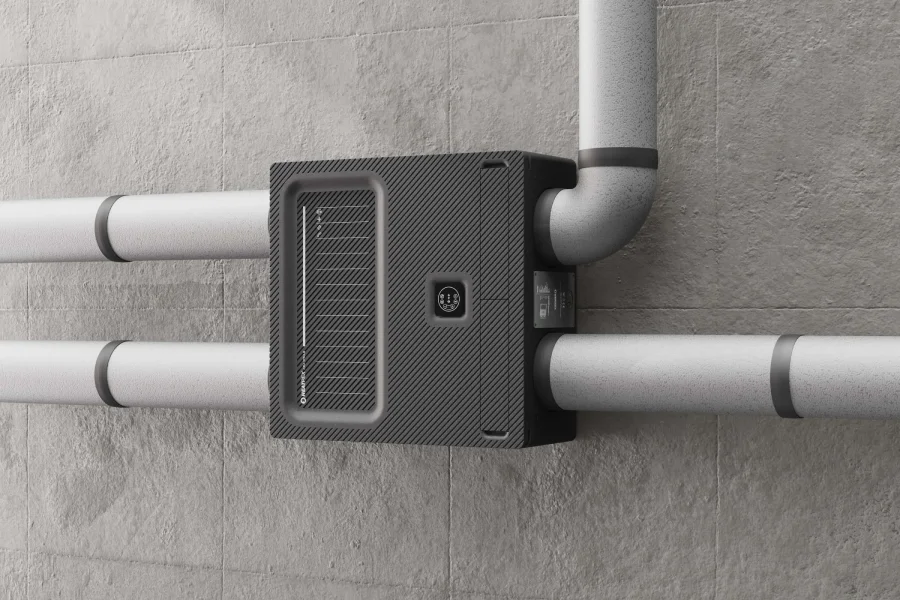
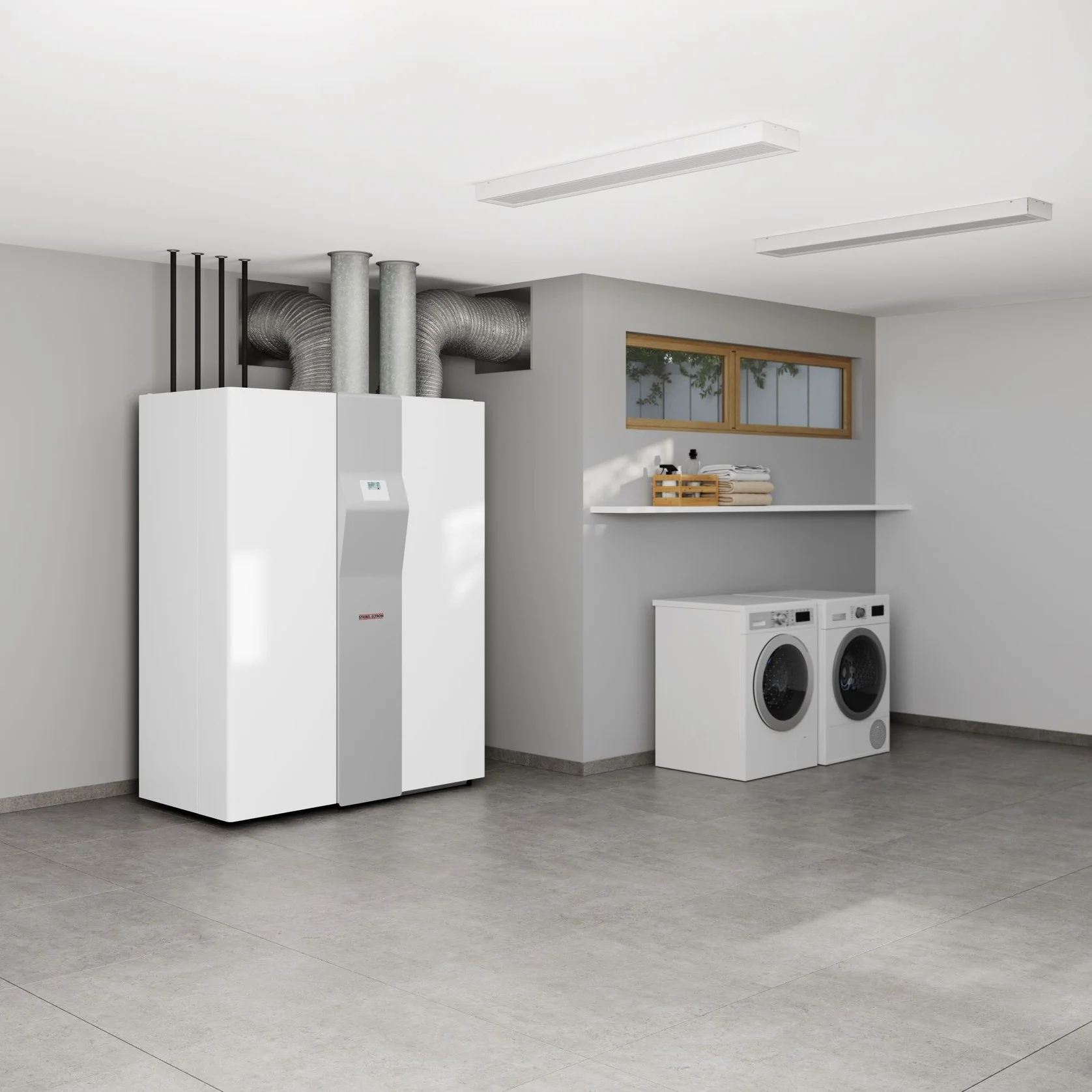
This unit, often housed within utility rooms, extracts stale air, often laden with pollutants and moisture, from wet rooms like bathrooms and kitchens. It simultaneously supplies fresh, filtered air into living rooms, bedrooms, and other habitable spaces.
MVHR systems are efficient because they extract the heat from rooms in your home that naturally generate more heat.
For example, at home:
This heat can then be distributed throughout your home using an MVHR system.Because they provide constant ventilation in damp areas throughout a building, they prevent moisture in the air from settling on surfaces and causing damage.
By doing so, MVHR systems effectively prevent common problems caused by excess moisture, such as condensation build-up and mould growth, in homes and other buildings.
When your MVHR system detects a change in air humidity levels, it will automatically boost operation to bring the humidity down to target levels.MVHR systems can eliminate condensation, mould and more serious structural issues that dampness can cause.
They also significantly improve the air quality in the building because they constantly extract dampness and pollutants in the air and supply the building with fresh air. MVHR systems are energy efficient and easy to run, only requiring a brief filter change once every 6 to 12 months.
Latest from our MVHR Blog
Our team delve into the latest advice and guidance on Mechanical Ventilation with Heat Recovery.
-
MVHR Explained – What It Is, How It Works, and Why It Matters
Mechanical Ventilation with Heat Recovery, more commonly known as MVHR, is a whole-home ventilation system designed to deliver fresh, filtered air while retaining heat that would otherwise be lost….

The Benefits of MVHR
Why do I need MVHR?
Ever noticed how new homes and buildings are becoming more airtight with insulation, draught-proofing and double-glazing? This air-tightness traps moisture inside from everyday activities such as cooking, washing, and even breathing. With nowhere to go, this moisture clings onto cold surfaces like windows or exterior walls, leading to condensation, dampness and mould, resulting in inferior Indoor Air Quality (IAQ).
Don’t let your air quality degrade. MVHR is your solution to a healthier, more comfortable indoor environment.
An MVHR unit continuously ventilates a property, meaning that everyday moisture doesn’t gather on surfaces – it is extracted to the outside, eliminating the risk of structural and cosmetic damage caused by condensation and mould.
MVHR systems are also super efficient and recover up to 91% of heat lost through extraction, transferring that heat to incoming air.
When is MVHR Recommended?
MVHR systems help achieve highly energy-efficient buildings, especially those with high air-tightness targets. These systems ensure controlled ventilation, constant air movement, and excellent indoor air quality without heat loss.
They are particularly beneficial in environments with high moisture levels, continually extracting moist air and supplying fresh filtered air.
MVHR systems also address concerns of polluted air in urban areas, purifying incoming fresh air before distribution. In short, MVHR is a reliable solution for achieving energy efficiency, improved air quality, and cost-effective heating system design.
MVHR Applications
Choosing an MVHR system
Introducing the right MVHR system for your building:
Get a FREE quote from RHW to help you choose wisely and enjoy optimal performance, energy savings, and healthier indoor air.